

PRESS RELEASE (3/16/2016)
Saturday, March 19 and Sunday, March 20, Loano will give a very special weekend, with the opening to the public of some of its most prestigious architectural and cultural heritage: Convent of Mount Carmel, Doria Castle, Doria Palace with the Historical Archives and the Yacht Club Marina di Loano.
The opportunity is provided by the 24th edition of the FAI Spring Days, promoted by the FAI – Albenga-Alassio Delegation under the auspices of the’Department of Tourism and Culture of the City of Loano and of the Liguria Region.
Throughout Italy, more than 900 extraordinary visits will be organized, free contribution, and will be the young people, volunteers and FAI's Apprentice Tour Guides®., to guide adults to discover places of great artistic and historical value. FAI Spring Days are open to all, but for FAI members, those who sign up during the Days and those who support the Foundation, there are exclusive visits and special events.
SPECIAL OPENINGS
A Loano, those enrolled in the FAI will be able to visit the Mount Carmel Convent (Saturday 19, 11:30 a.m./4 p.m. - Sunday 20, 4 p.m.), characterized by an important square cloister, where a community of friars still resides, cultivating vegetable gardens with vineyards, olive groves and orchards and raising some animals.
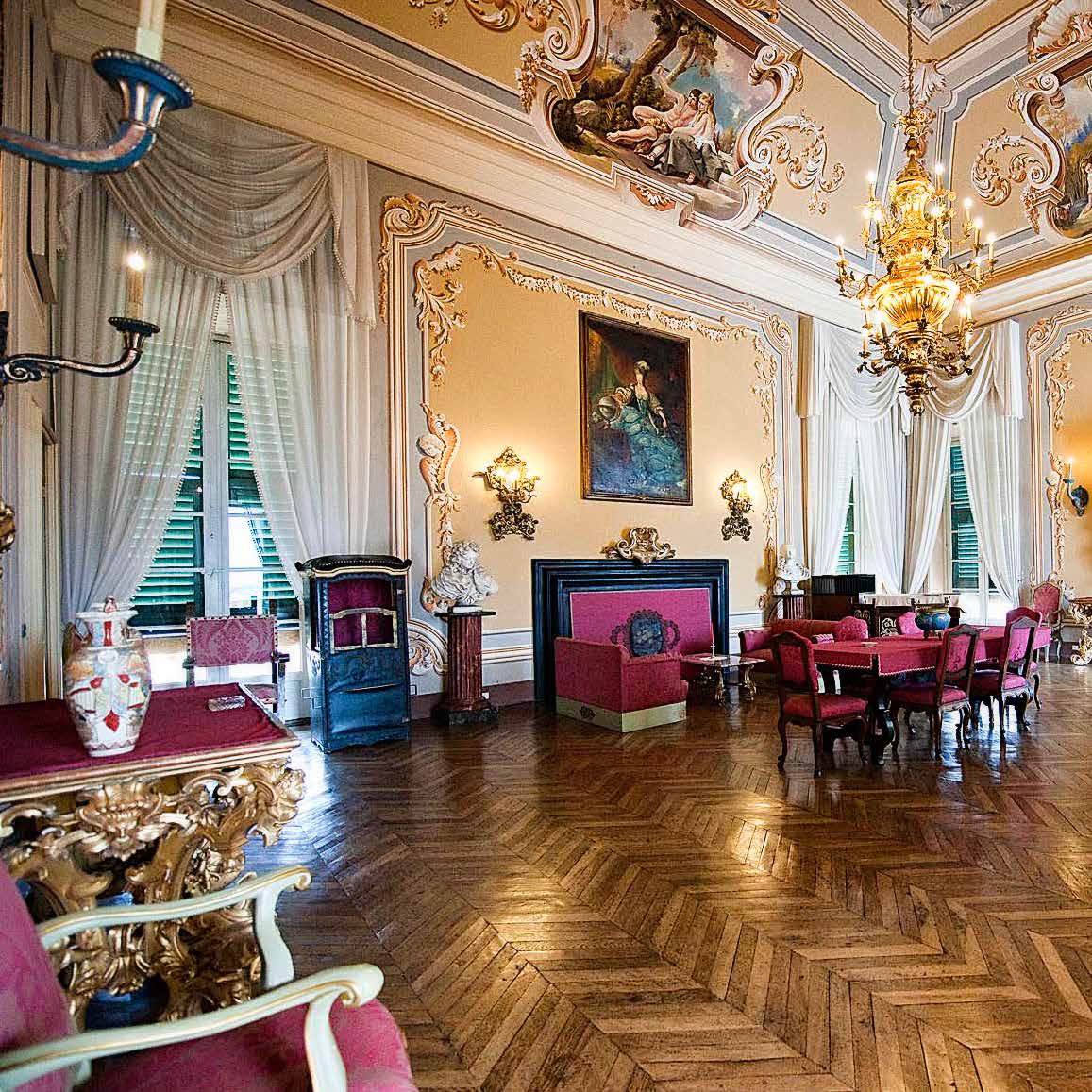
Doria Palace Will be open to all who wish to admire it March 19 and 20 from 11.00 at 17.30. The students, “Apprentice Cicerones®”, from the area's high schools will take visitors on a tour of the impressive city palace that Count Giovanni Adrea Doria I had built starting in 1575.
The special opening also includes the opportunity to view some important texts from the’Municipal Historical Archives, recently rearranged and which will be inaugurated and opened to visitors for the occasion.
Thanks to the kind permission of the’Percassi Real Estate, an extraordinary visit to the Doria Castle (Saturday 19 and Sunday 20, 11 a.m.-5:30 p.m.), now a private residence. Situated in a panoramic and strategic position on Loano's territory, the mansion arose in the 12th century as a fortified enclosure, and with the early Dorias it assumed the function of a feudal lord's residence, until in the 16th-17th centuries it took its present form as a Renaissance palace.
Finally, the Yacht Club Marina di Loano, custodian of the traditions and values of Loano seafaring, will open the doors of the clubhouse, and in collaboration with the Lions Club Loano-Doria, will offer information on the history of Loano and its seafaring with the presence of the students Apprentice Tour Guides®. Information on the FAI Spring Days program will be available, and from the belvedere you can admire Palazzo Doria, the Castle and the Convent of Monte Carmelo, enjoying a splendid view of the city.
EVENTS
A Loano, the program of the 24th edition of the FAI Spring Days. will be enhanced by a number of side events.
Opening the appointments in Doria Palace Will be, Saturday, March 19, to the 10 o'clock, the presentation of the’Loano Municipal Historical Archives inventory and reorganization work, taken care of by the Dr. Iolanda Bovani from Varazze. Speaking at the initiative, which will take place in the Council Chamber, will be the Mayor of Loano. Luigi Pignocca and the Archival Superintendent of Liguria Dr. Francesca Imperiale. This will be followed by the opening and tour of the Archives.
At 4 p.m., always in Council Chamber, will be held the presentation of the book “Lodani mirabilia - The wonders of Loano”, organized by the’UNITRE Loano.
The volume, edited by art expert Claudia Ghiraldello, brings together in itself the features of an art text and a Loano discovery guide and shows the special aspects of the city, which arouse wonder, especially in the art-historical sphere. Some already edited and shared, others unpublished. This is because in her path as an art expert and author of art texts Ghiraldello has always favored researching and publishing elements never before found, never before known. And at Loano there are many unpublished realities that the author wanted to include in her research. These are religious works: statues, wall paintings, canvases, panels, even some buildings themselves, never before this work analyzed. But it is also about works of art traced in places of secular character, in particular we refer to the complex of works preserved and here for the first time disclosed within private mansions. The great Loano lineages, Carrara house, Maccagli house, Garrassini Garbarino house, Molle house, Olivieri house, of which the author had the privilege of studying the relevant dwellings, proved to be a valuable treasure chest of data opened here for the first time.
Sunday, March 20, the program of side events will continue, at the 3:30 pm in Council Chamber, with the initiative “Videoconcerting”, a multimedia performance featuring songwriting and art historical footage with Franco Boggero (voice) and Marco Spiccio (keyboards).
The videos of remarkable directorial quality will cover: the Museum of Natural History in Genoa, with the strange story of a stuffed orangutan; the great Teatro Istoriato in Laigueglia, a gigantic disassembled Cartelame designed in the 19th century, for Holy Week, by an extravagant local intellectual; and the practice of ’furnishing with memory“ implemented in the villages of western Liguria, reusing as elements of street furniture medieval sculptural fragments found on site. The songs will be taken from the ”old“ repertoire of singer-songwriter Franco Boggero, who will also present songs that will make up the forthcoming album ”Una punta da cinque.“.
Finally, the two days will feature the group exhibition of paintings Of the Press and Brush Association”, set up in the Mosaic Hall.
HISTORICAL ARCHIVES OF THE MUNICIPALITY OF LOANO
The archives of the City of Loano are located in 4 rooms and contain correspondence dating from the late 1500s to 1970. Thanks to the allocation of a grant from the Archival Superintendence of Liguria, the historical archive was inventoried and reorganized by Dr. Iolanda Bovani. The inventory makes it possible to trace the exact location of the deed on the archive premises, making it more functional to use.
IN THE FIRST HALL the oldest deeds (1594-1759) can be observed.
Sorted according to calendar years, there are the Records relating to civil and criminal justice in the Genoese era. The Civil and Criminal Curia was the body responsible for the administration of justice. It was authorized to try cases, find an accused guilty, and determine the amount of punishment.
In the same room are preserved the records of the Civil Hospital, of the Monastery of St. Augustine, of the parish of St. John the Baptist and of the’Orphanage.
Another section is devoted to the’ECA: (ENTE COMUNALE DI ASSISTENZA) established in 1937 that worked on behalf of families in need. Interestingly, the birth of the ECA transformed mere alms charity into a more modern activity of assistance, and all institutions with similar purposes (one above all the Congregation of Charity) were merged into it.
Also in this room, there is a section with documents of the Pious Works and the Congregation of Charity. In 1862, the Opere Pie were regulated and a Congregation of Charity was established in each municipality of the Kingdom for the purpose of administering the goods intended for the benefit of the poor.
In particular, the following can be observed:
- Pietro Richeri's will: the oldest 1605
- Giusepppe Repetto's will of 1864
- Giuseppe Cesarea's 1910 will, which names the Congregation of Charity as his heir: he donates a villa in Oneglia, the property contained therein and his savings; requests that within 8 months of his death 2 marble busts depicting his parents be made and placed at the entrance to the hospital; and indicates an obligation for 50 years to ordain a mass on his name day and death for himself and his parents.
IN THE SECOND HALL records of protocol, public works, administrative elections, conciliation office records, and accounting records of the entity are present.
IN THE THIRD ROOM there are cadastral registers from the Napoleonic era, registers of rural property and buildings, deeds relating to changes in land ownership and buildings, rolls for land and building tax, applications for cadastral voluptures, and notes of property transfers. Napoleonic edict Decree No. 62 of 1807 established the cadastre of the Kingdom of Italy.
Particularly in this room can be observed:
- copy of the map of the center of Loano dated 1808 (Napoleonic cadastre)
- permit for maritime transport of commodities to Captain Etienne Isnardi (permission to embark 70 myriagrams of rice on the boat called Notre Dame de Loreto with destination Red Island;
- Permit to sail with directions from 1798
- requisitions of boats and mules that were used to transport goods from Loano to Finale in the service of French troops in 1801
- Imposition of the grain tax of 1800 (i.e. year IV of the Ligurian republic)
- Justice of the Peace document attesting to the ownership of the boat Notre Dame de Loreto by Francois Gandolfo of Loano. Deed recorded in Savona in 1806
IN THE FOURTH ROOM there are interesting collections of public acts from 1744 to 1892.
It is a very large and comprehensive series.