

PRESS RELEASE (10/12/2014)
He continues, at Loano, the review “Books Under the Tree”,promoted by the’Department of Tourism, Culture and Sports of the Municipality of Loano.
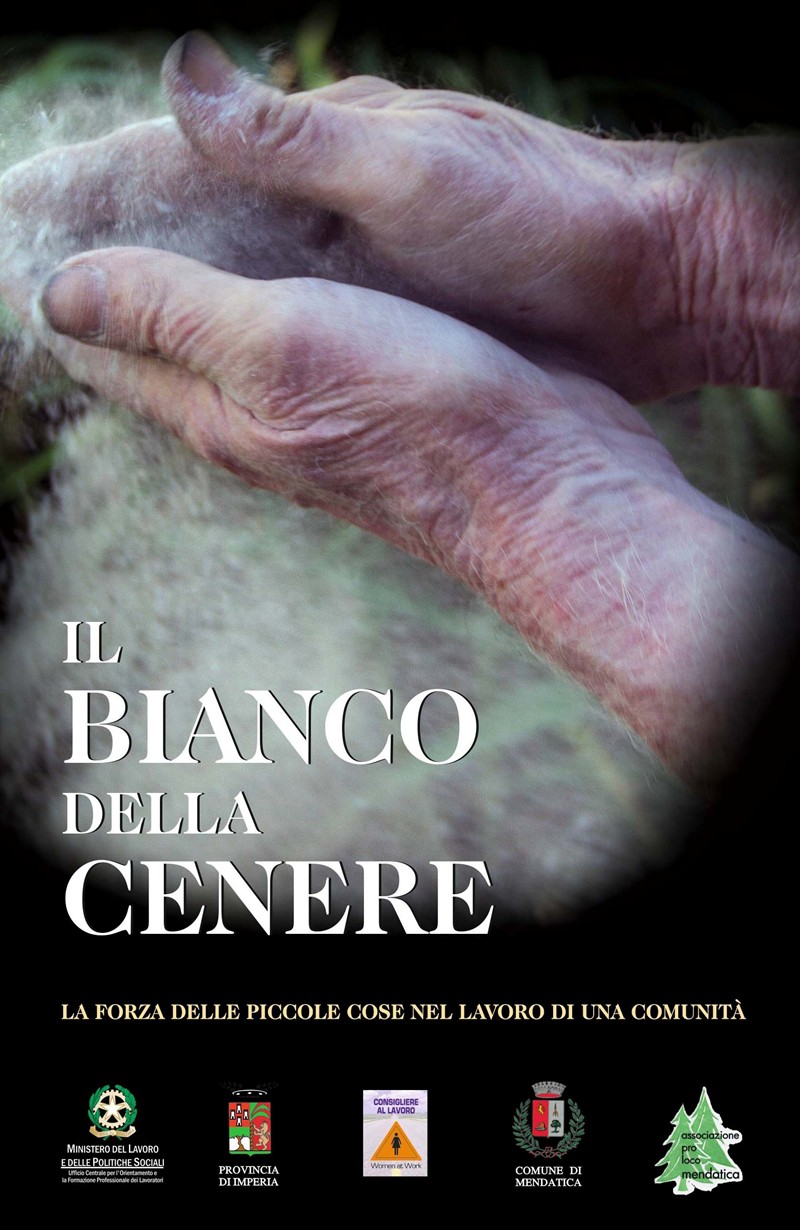
Sunday, December 14, in the Civic Library, to the 4 p.m., will be presented the book “The whiteness of ashes, the power of small things in the work of a community.”, published by Amadeo Graphics and carried out by the Municipality of Mendatica and from the’Equality Office of the Province of Imperia in collaboration with the Pro Loco of Mendatica.
The book is the synthesis of a collective work done in harmony and sharing by the entire community of Mendatica: the elders were bearers of life experiences, work, solidarity and growth and transferred to the authors the historical-anthropological heritage of their village.
Through a collection of life stories, the volume offers a journey into the memories of the inhabitants of Western Liguria, interweaving the stories of the past with the ancient recipes of the centuries-old Cucina Bianca, the gastronomic culture of the shepherds of the Upper Arroscia Valley and the Occitan lands.
Along the slopes of the Maritime and Ligurian Alps, the centuries-old agricultural and pastoral transhumance has united the people of the Ligurian, Cuneo and Occitan valleys in a common cuisine made of farinaceous foods, dairy products, and lightly colored vegetables such as potatoes, turnips, leeks, and garlic, or from wild products gathered on transhumance trails.
Mendatica is part of the White Kitchen Road, a projectthat links it, together with the Ligurian municipalities of Cosio d'Arroscia, Montegrosso Pian Latte, Pornassio and Triora, to the French municipality of La Brighe and the Piedmontese municipality of Tenda in the province of Cuneo.
What binds this area is the traditional pastoral and agricultural economy that gave birth to the Huts, tiny stone villages scattered across the Ligurian Alps, between 1,000 and 1,600 meters. When the season was propitious, shepherds and farmers, in order to make better use of the mountainous territory, would leave their home villages and move to the Huts to return to their respective countries in the fall. Thus, a real alpine pasture civilization, a supportive society in which work and mutual assistance were indispensable elements in dealing with the difficulties of the land. Even the urban structure of the Huts tends to emphasize the gathering points of the small community: the church, the farmyard, the bakery and the communal washhouse...
Today what remains of that civilization is a small community of shepherds, the tiny villages at high altitudes, the dense network of transhumance trails, which joined the villages to the Malghe, and thematic routes rich in evidence of popular culture, such as the White Kitchen.
The book is embellished with a preface by Carlin Petrini, international president of Slow Food and by vintage photos.
Leading the meeting will be the curator of the reviewGraziella Frasca Gallo Of the Journal of Loano. Musical and singing accompaniment will be provided by the Master Roberto Sinito.
The presentation will close with the tasting of some “white cuisine” dishes.