

PRESS RELEASE (4/04/2016)
From the’April 8 to 10 will come to Loano the most representative European reenactment groups to celebrate the 220th anniversary of “passage of the young General Bonaparte” in Liguria that occurred in 1796.
This historic event saw the’Italian Armed Forces led by the young General Bonaparte, newly appointed commander of the French army, and on the other the Austrian Imperial Armies (Army of Lombardy) and the Royal Sardinian Armies who had established themselves on the Bormida Valley front.
The historical event will be commemorated during the three days of the event through the reenactment of the armed clashes.
The initiative, promoted by the’Department of Culture and Tourism of the City of Loano and organized by the 51eme Demi Brigade de Bataille by Loano under the auspices of the Liguria Region, will involve the best European reenactment units.
The event will also host the meeting, promoted by the European Federation of Napoleonic Cities, between Italian municipalities and French municipalities in the Provence-Alpes-Côte d'Azur and Corsica regions that are part of the European Cultural Route “Destination Napoleon.”.
In addition to the mayor of Loano, the meeting will be attended by Luigi Pignocca, the president of the European Federation of Napoleonic Cities Charles Napoleon, heir to the Bonaparte family, the Director Jacques Mattei and the Regional Councilor Ilaria Cavo. The municipalities and associations of Liguria already part of the itinerary will be present, as well as the cities of Lucca e Portoferraio, the Provinces of Pisa e Leghorn, the French representatives of the “Strada Napoleone” (Napoleon Road), coordinated by the ANERN association of the Provence-Alpes-Côte d'Azur Region and the Corsican cities of Ajaccio, Corte, Bastia.
They will be oltrand three hundred participants in the historical reenactment and will come to Loano from the Belgium, France, Germany, England, Russia, Czech Republic, Austria, and of course by several regions of Italy.They belong to groups made up of passionate enthusiasts of the period, who have taken on the task of preserving the historical memory of individual military units of the time, through careful study based on archival and literary research.
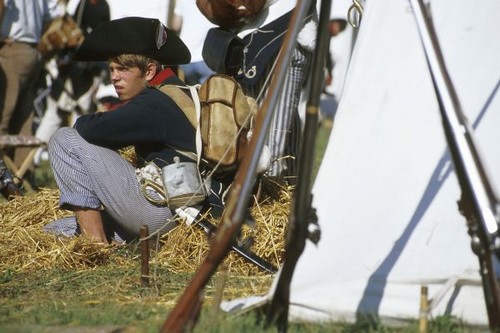
During the three days at Loano, the reenactment units will offer visitors the opportunity to visit the camps set up on the beach, where they will live the life of the late 18th century soldier, sleeping in tents on straw.
The event will kick off Friday, April 8, in Doria Palace, with the lecture (h.10/12) by historians Alexander Garulla e Oleg Sokolov. The public meeting will explore the Italian Campaign led by General Bonaparte and the pre-Napoleonic historical event of the Battle of Loano, which was of great importance for Napoleon's subsequent expansion into Italian territories, so much so that the Arc de Triomphe in Paris lists it as its first inscription.
In the afternoon, again in the council chamber (3:00 p.m. to 6:00 p.m.), there will be a meeting dedicated to the presentation of the “Destination Napoleon” Federation and the opportunities offered by European programs linked to the project.
The first day of events will conclude with the inauguration, at 18.00, at Riviera Palace Residence (Via Azzurri d’Italia 9) of the exhibition “Perish all tyrants”. The exhibition, curated by Alexander Garulla e Andrea Puleo will bring together weapons, documents, artifacts, and uniforms from the Battle of Loano.
Also in the late afternoon, seaside encampments will come alive with the presence of soldiers.
Saturday, April 9 the revolutionary troops will march through the city streets and engage in training and clashes in the historic center.
In the afternoon at 5:50 pm the arrival of the General Bonaparte and its General Staff in Doria Palace. In the evening in Italy Square from 9 p.m. There will be a big party involving soldiers and civilians with French folk music and dances from the late 18th century.
Sunday, April 10 On the beach and in the historic center, cannon fire will once again be heard, and troops will clash in the final battle.
Historical Notes
In Europe in 1795, Austria replaced Spain as the dominant power in Italy and, together with Naples, Bavaria, the Kingdom of Sardinia, and various Italian and German principalities, formed an anti-French coalition.
France sent a young Corsican artillery officer, very close to Robespierre, who had made a name for himself in the suppression of the revolt in Toulon. The young Napoleon Bonaparte took command of the Army of Italy on March 27, 1796, succeeding Schèrer.
The Italian Army, a grandiose title that provoked considerable irony among its adversaries, was composed of men who resembled bandits more than soldiers, dirty, with tattered uniforms, and lacking even meager food rations. Pay was months late, and the young Napoleon realized that an offensive was the only way to prevent mass desertion.
“I want to lead you to the most fertile plains in the world; rich provinces and great cities will be yours.”
These words were followed by an admiring cheer: the first manifestation of that relationship with the troops that was destined to become magnetic.
In the’April 1796 begins the Italian Campaign with the Young General Bonaparte's passage through Liguria.
Napoleon put his strategies and tactics into action, stunning the enemy with the decisiveness of his actions and the violence of his attacks. Assisted by his lieutenants, especially General Andrea Massena, Pierre Augereau, and Jean Mathieu Sérurier, forced the Kingdom of Sardinia to surrender its arms after ten days and conclude the Armistice of Cherasco, while the Austrian army, repeatedly defeated, retreated to Lombardy and then to Trentino.